Is It a Meteorite? Simple Checks Before You Get Excited

Every year, people bring rocks to universities and museums convinced they've found a piece of an asteroid or comet. Almost all of them turn out to be ordinary Earth rocks, industrial byproducts, or minerals that just happen to look the part. That's not a knock on anyone — meteorites really do turn up in backyards and fields, and a genuine find is exciting. But before you start planning what to do with your space rock, it helps to run through the same basic checks that meteorite scientists use to weed out the obvious no's. None of these checks can prove a rock is a meteorite on their own, but they can help you decide whether it's worth pursuing further.
1. Look for a fusion crust
When a meteoroid rips through the atmosphere, friction heats its outer surface enough to melt it briefly, leaving behind a thin, dark rind called a fusion crust once it cools. On stony meteorites this crust is usually no more than a millimeter or two thick, and it can look glossy, matte, or slightly bubbly depending on the type of meteorite and how it tumbled during entry.
Freshly fallen meteorites often show this crust clearly, sometimes with a faint bluish or brownish tint. But fusion crust weathers away over time, especially on older finds that have been exposed to rain, soil, and oxidation for years or decades. So the absence of a crust doesn't rule a rock out — it just means you can't use this clue by itself.
2. Check the weight
Pick the rock up and pay attention to how heavy it feels for its size. Meteorites, particularly iron and stony-iron types, tend to be noticeably denser than typical Earth rocks of a similar volume because they contain a large proportion of metallic iron and nickel, along with other dense minerals.
If a rock feels surprisingly light, or about what you'd expect from an ordinary stone, that's a point against it being a meteorite. If it feels unexpectedly heavy in your hand, that's worth noting and moving on to the next checks.
3. Try the magnet test
Most meteorites contain enough iron-nickel metal to respond to a magnet, so this is one of the quickest field screens available. Iron meteorites and stony-iron meteorites will typically attract a magnet strongly. Stony meteorites, which make up the majority of witnessed falls, usually still contain some metal and will attract a magnet to a lesser degree, sometimes only weakly.
A strong magnetic response is a good sign, but keep in mind it isn't conclusive by itself — plenty of terrestrial rocks and industrial materials also contain enough iron to react to a magnet.
4. Look for regmaglypts
Regmaglypts are shallow, thumbprint-like indentations that can appear across a meteorite's surface. They form during atmospheric entry as hot gases unevenly erode the softer parts of the surface, sculpting the rock the way flowing water shapes sand. On well-preserved individuals, especially iron meteorites, these can look like someone pressed their fingers into the rock before it hardened.
Regmaglypts are a strong indicator when they're present and well-defined, but not every meteorite fragment shows them clearly, particularly if it broke off from a larger mass after landing rather than being shaped as a single body during entry.
Get Rock Identifier free on iPhone and Android.
5. Do the streak test
This one is simple and genuinely useful for ruling things out. Scratch the rock firmly across an unglazed porcelain streak plate (the unglazed back of a bathroom tile works fine) and look at the mark it leaves behind.
Genuine meteorites generally leave little to no streak, or at most a faint gray mark. If your rock leaves a rusty red-brown streak, you're likely looking at hematite, and if it leaves a dark gray to black streak, magnetite is the more probable culprit. Both are common, naturally occurring iron oxide minerals that get mistaken for meteorites constantly because they're dense, dark, and often magnetic.
6. Common meteorwrongs
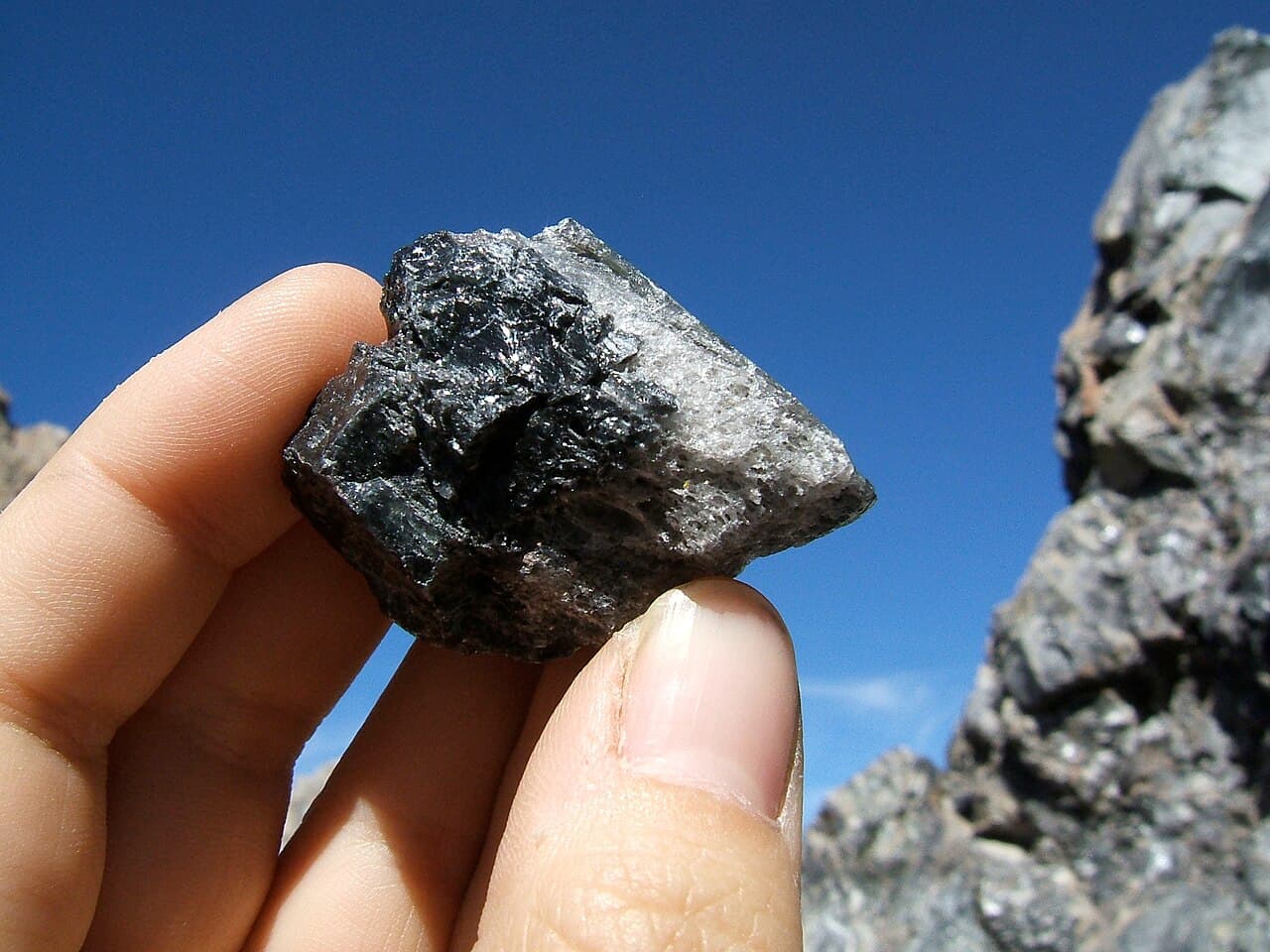
"Meteorwrong" is the term collectors use for a rock that gets mistaken for a meteorite. The most frequent offenders are hematite and magnetite, both discussed above, along with iron slag — a manufactured byproduct of smelting and metalworking that is often dumped as fill near old industrial sites, roads, and railways. Slag can be dark, dense, magnetic, and pitted in ways that superficially resemble fusion crust or regmaglypts, which is exactly why it fools so many people.
Other frequent look-alikes include vesicular basalt (a volcanic rock with gas-bubble holes that meteorites don't have), rusted pieces of iron machinery or ore, and various dark, weathered terrestrial rocks that simply look out of place. If your rock has obvious bubbles, holes, or a rough uneven grain like ordinary volcanic rock, that's a point against it.
7. When to get it tested
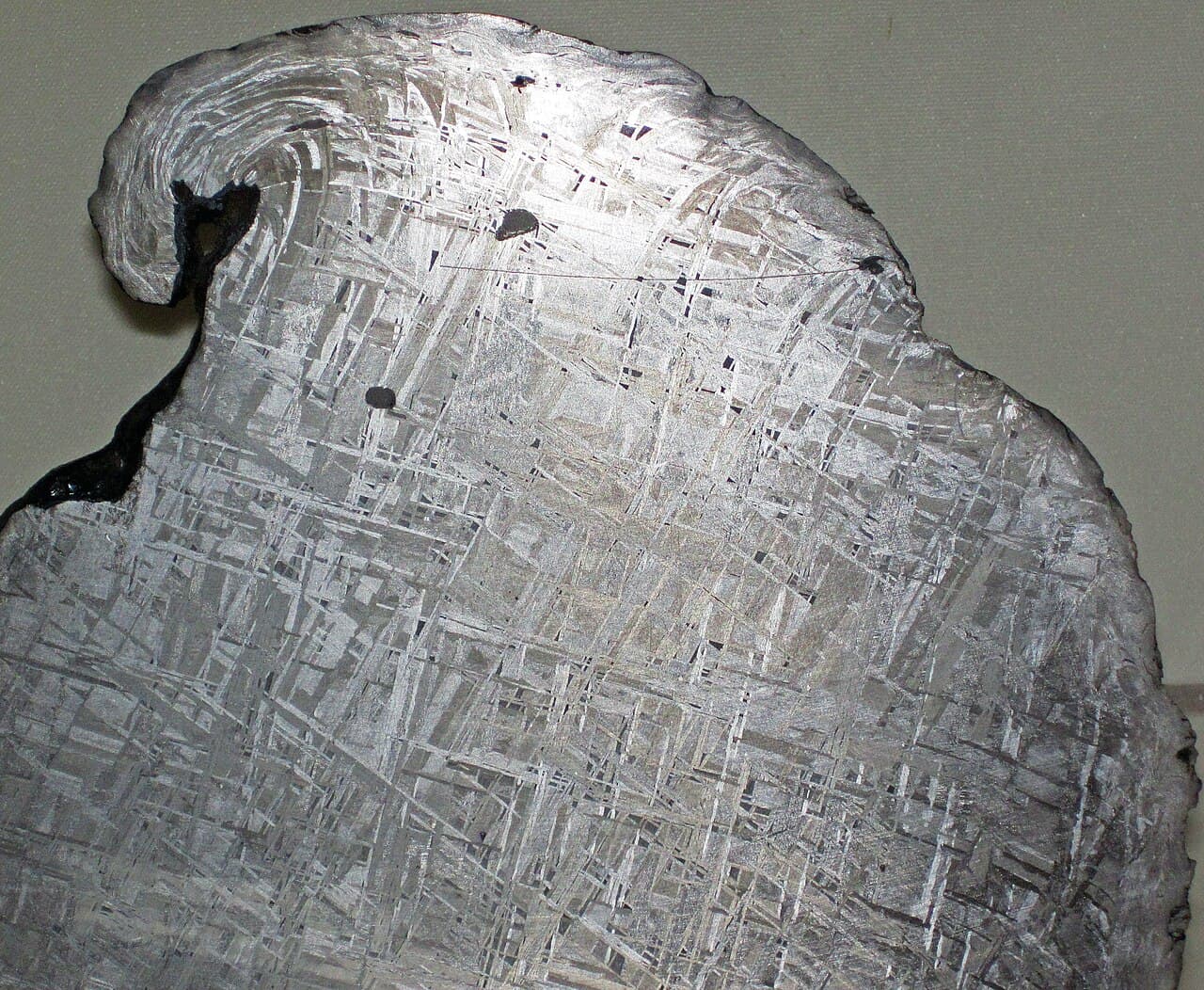
Here's the honest truth: none of the checks above, even taken together, can confirm a meteorite. Only laboratory analysis can do that — typically a cut and polished cross-section examined under a microscope, along with chemical or elemental analysis to look for the nickel content and mineral textures unique to extraterrestrial material.
If your rock passes several of these checks, the next step is to reach out to a university geology or planetary science department with a meteorite lab, or a natural history museum such as the Smithsonian's Department of Mineral Sciences. Most researchers are happy to take a look at clear photos first, showing the overall shape, any crust, and a close-up of a broken or cut surface if you have one. Be patient: identification services are usually run by a small number of specialists, and a genuine meteorite is a rare enough event that most submissions turn out to be meteorwrongs.
Running through these checks yourself is a great first step, and it can save you the trouble of mailing off an obvious chunk of furnace slag. Once you've looked it over, snap a clear photo of the rock — including any crust, pitting, or cut surface — and run it through our identification app for an instant first read on what you might be holding. Just remember that for anything that looks genuinely promising, a real answer will still need to come from a lab, not a photo.